
2007-04-21 »
Well, 21 postcards later, I'm back a bit early from Spain. More on that some other time, but I promise not to bore you with a play-by-play recap. Instead, here's something I learned from Europe:
The System vs. the Flow
When I met up with pphaneuf in Spain, he complained for awhile about the level of beaurocracy in France. Just for example, it's really complicated and difficult for someone to start a business, rent an apartment, hire someone, fire someone, get a job, rent an apartment, get a bank loan, and so on. It's almost impossible for an outsider to do, because getting anything done depends on who you know, not purely who you are.
Put in those words, North Americans might be tempted to label that "corruption," but it's not, at least not in the usual sense. I didn't have much to say about it so early in my trip, but after spending more time in the middle of European culture, I think I understand it now: they might look kind of similar on the outside, but the fundamentals of American and European civilizations are completely different.
 |
| The System |
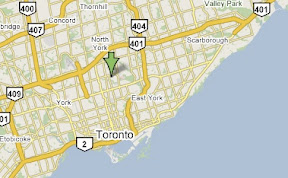
The American system is very mathematically clean, reproducible, and scalable. The ideal they(*) aim for is a culture in which you can start new companies easily; accept unending supplies of immigrants; fail cheaply; switch tasks, jobs, houses, cities, or specializations quickly. To do this, they built a system based largely on not getting to know people personally; instead, they use detailed statistics and rules to determine what's good and what's not. Borrowing money is easy if you're a "good credit risk"; immigrating is easy if you have the right skills; bankruptcy laws are lax; venture capitalists are everywhere, desperate to give you money, and then they mostly expect you to fail. Most cities are mass-produced based on the scientifically determined ideal road layout and endless copies of identical suburbs and strip malls. The American system is a fundamentally unstable system with controls.
 |
| The Flow |
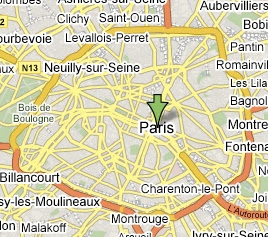
The European system, on the other hand, is not really a "system" at all; I'll call it the flow. It never needed to be scalable, because European countries grew slowly over hundreds or thousands of years. Mass immigration was never really an option; there was never a time when most people didn't know most of the other people in most neighbourhoods. And so you don't need the mathematical models of the American system. Should I lend you money? Well, sure, if I know you and you seem like a reliable kind of guy. Bankruptcy? You mean not even trying to pay back the money I lent you? But I trusted you! Well, that's it then, I can never trust you again as long as you live. Not paying back right now is one thing, but not ever trying is just plain anti-social. And hiring someone is okay, as long as you're sure you'll treat them properly and never, ever leave them without a job. After all, your employees depend on you now; you wouldn't want people to think you're unreliable.
If, like me, you're used to thinking about American-style systems, your brain isn't configured to understand the European-style flow. What exactly are the rules they use to determine whether it's okay to start a business, hire someone, fire someone, lend someone money, or build a new building in a certain style and place? It's impossible to answer that question, because it's the wrong question. In the flow, decisions don't need to follow a simple set of rules; you just do what feels right. Your intuition, trained by years of experience, will do the rest.
The flow is a fundamentally stable design; it doesn't need a "control system" to make it work. It just keeps on flying by itself.
France's not-so-imminent collapse
azrhey also told me about the ongoing theory that France's economy is on the verge of collapse - but that people have been saying so for the last hundred years. The "system vs. flow" theory explains this paradox easily: stable designs are never "on the verge of collapse." Only unstable systems are (and they always are!). If you're trying to analyze your stable system as if it were unstable, all your equations will be wrong before you start.
Programming and the flow
Note that "the flow" is another name for the zone; this isn't a coincidence. In the zone, programmers just write the right program without having to think too much about it. No matter what they claim, they're not actually following a bunch of learned rules, but instead just letting the program write itself, intuitively, with their intuition trained by experience. This is exactly how the European cultural flow works. And if you know the feeling of programming in the zone, you can understand why Europeans have higher satisfaction with their quality of life than Americans.
Epilogue
Although they do crash more, unstable systems are usually more leading-edge, more exciting, and more flexible than stable ones.
(*) I would classify the Canadian system as a hybrid of the system and the flow. Whether or not that constitutes a compromise or an improvement is an interesting question to think about.
You can find me on Bluesky. Or subscribe with RSS.